
Think back over last week. How many hours went on emails, errands and tweaking the website, and how many went on deciding where the business is heading?
Most owners would struggle to answer that honestly. The week disappears into whatever feels urgent, and by Friday there’s a long list of jobs done and not much to show for it.
Not every hour is worth the same
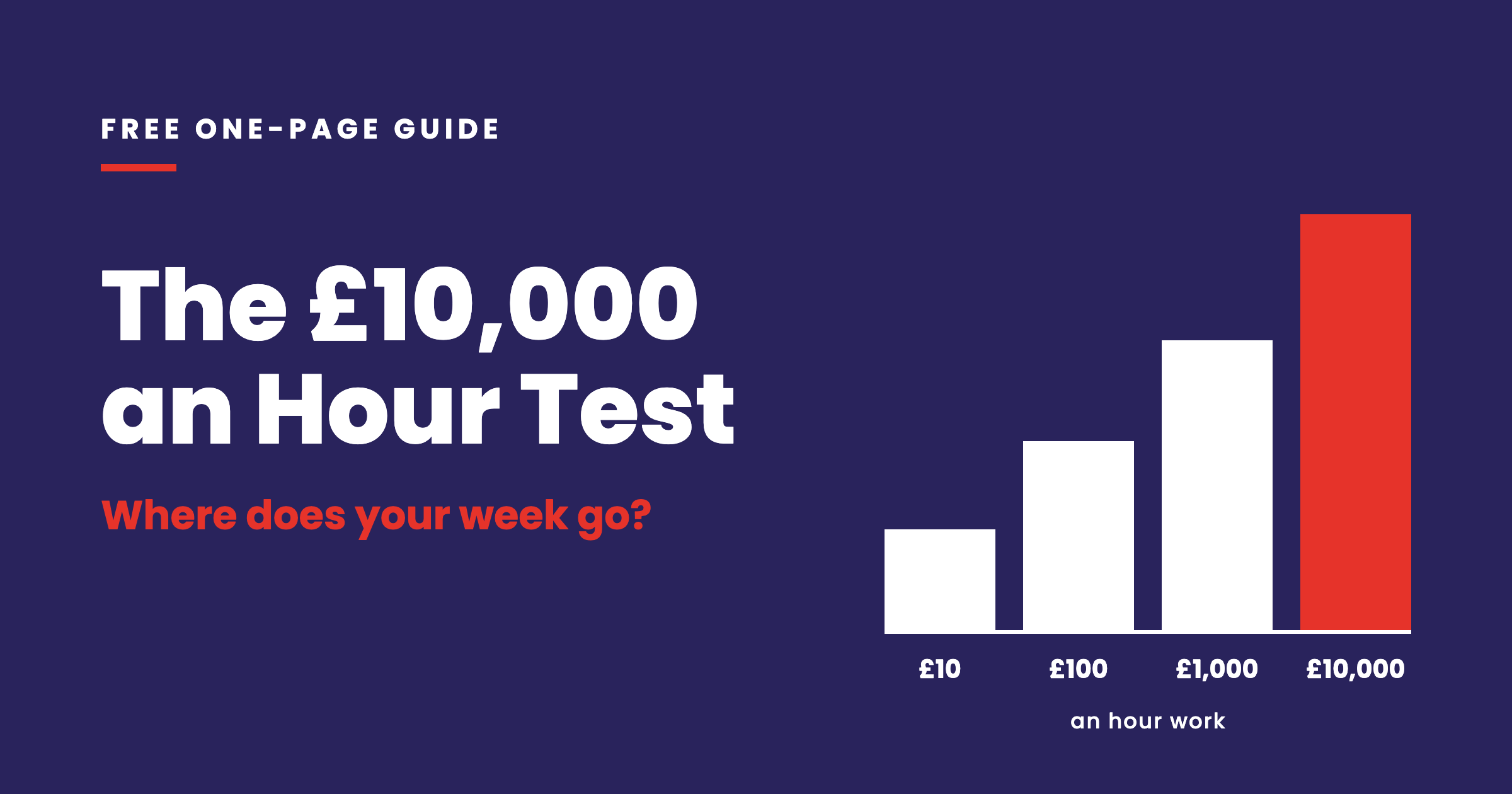
An hour spent answering the phone and an hour spent working out how to sell to bigger customers both fill a slot in your diary, but they are very different things. One way to see the gap is to sort your work into four levels: £10, £100, £1,000 and £10,000 an hour work.
Think of those figures as a measure of how much difference an hour of that work can make to your business, rather than what you earn.
- £10 an hour work: running errands, routine emails, fiddling with the website, doing the book-keeping. Useful jobs, but nearly anyone can do them, and someone else can usually do them better.
- £100 an hour work: fixing customer problems, speaking to qualified prospects, putting together quotes and proposals. This is where many owners spend most of their week. It’s solid work, but it rarely moves the business forward on its own.
- £1,000 an hour work: planning your day, negotiating with qualified prospects, designing your sales funnel, handing over complex tasks and coaching your team. Now the business starts to feel the difference.
- £10,000 an hour work: creating better offers, sharpening your positioning, choosing the right people and setting the values and culture. One good hour here can change the direction of the whole business.
Why your time as a business owner gets stuck on the left
A business stays stuck when its owner spends the whole week down the left-hand side. That isn’t laziness. The £10 and £100 jobs are easy to start, easy to finish, and they give you the satisfaction of ticking something off. The £10,000 jobs are vague and uncomfortable, and nobody is chasing you for them.
How to shift your week
- Audit last week. Write down what you actually did and put each task into one of the four levels. Be honest, because you’ll probably be surprised.
- Hand off the bottom end. Anything at £10 an hour should go to someone else, whether that’s a team member, a virtual assistant or a bit of software. Then start working through the £100 jobs.
- Protect some time on the right. You don’t need to live there all week. Block out a regular slot in your diary, treat it like a client meeting and don’t give it away.
If you want more on this, have a look at our article on using your time more wisely as a business owner.
Get the one-page guide
We’ve put all of this onto a single page, with 40 tasks sorted into the four levels so you can see where your own week lands. Fill in your details below and I’ll send it straight over.
Looking for more practical guides? Browse the Success Collective resources library, or see how we work with business owners.

